
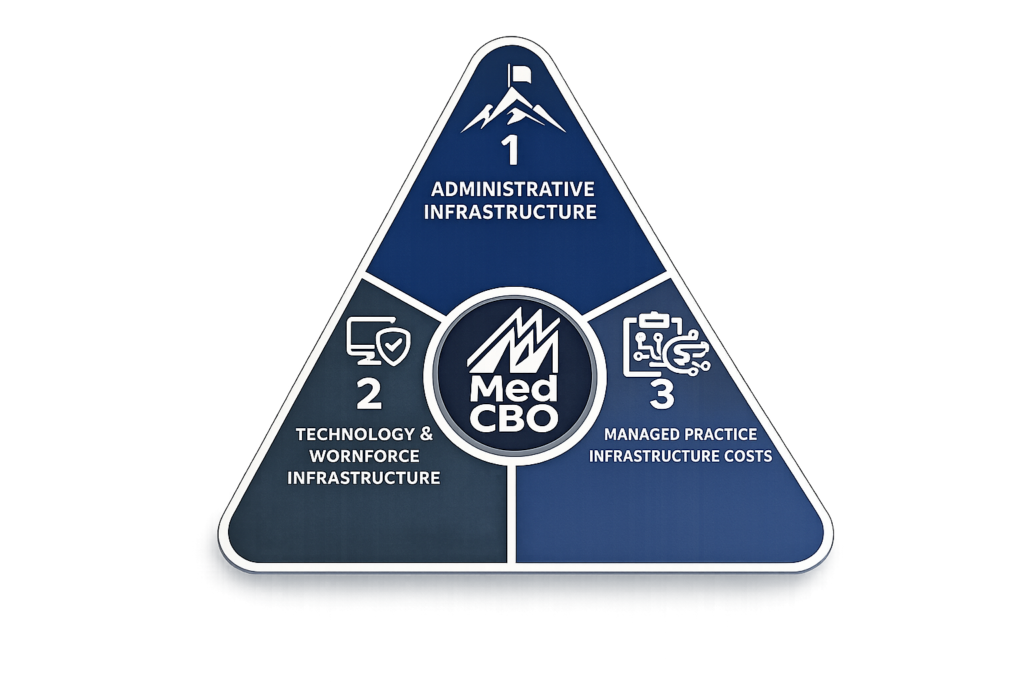

Administrative Infrastructure
Administrative infrastructure is the operational foundation required to support compliant, scalable physician practices. MedCBO centralizes critical business operations including revenue cycle management, credentialing, payer contracting, accounting coordination, compliance workflows, reporting, and administrative oversight into a unified operational framework. This allows physicians to reduce administrative fragmentation while improving operational continuity, financial visibility, and organizational scalability.

Technology & Workforce Infrastructure
Modern independent practices require secure, integrated technology systems and workforce enablement tools capable of supporting efficient operations across clinical, financial, and administrative workflows. The Summit Model includes access to a coordinated technology and operational ecosystem designed to improve communication, workflow standardization, reporting visibility, cybersecurity alignment, workforce coordination, and business continuity.
Managed Practice Infrastructure Costs
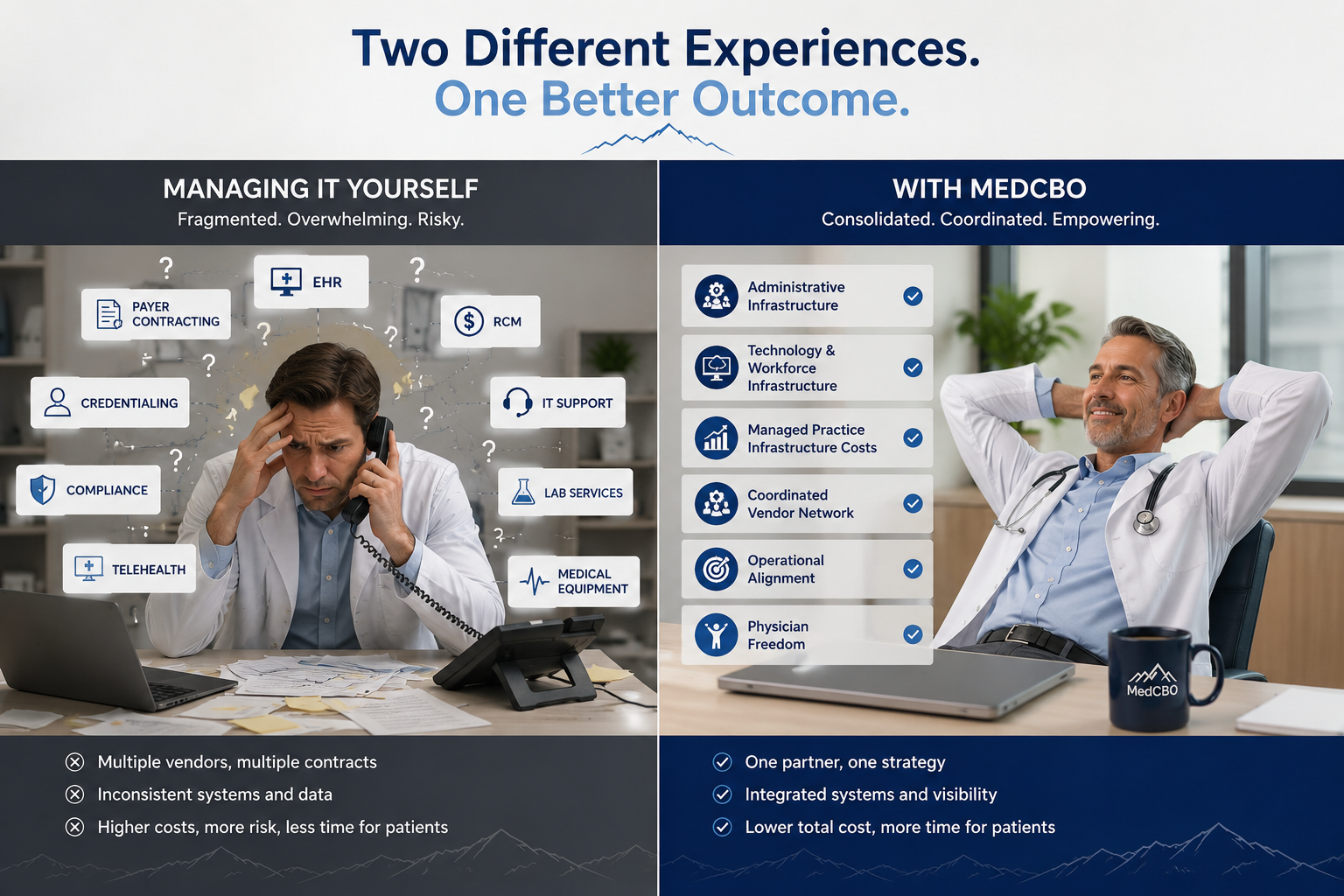
Independent practices often face fragmented vendor relationships, inconsistent procurement processes, duplicated systems, and unpredictable operational expenses. The Summit Model introduces a managed infrastructure approach that helps practices coordinate operational services, business systems, and administrative resources through a centralized operational framework designed to improve efficiency, visibility, and long-term sustainability.

Startup Infrastructure & Launch Costs
Every independent practice requires upfront infrastructure before opening or transitioning into ownership. These costs may include technology setup, credentialing and enrollment, vendor onboarding, compliance preparation, banking setup, equipment coordination, workflow design, and operating reserves. MedCBO works to consolidate and coordinate the startup process so physicians are not left managing disconnected vendors, duplicate expenses, and avoidable implementation delays. Startup needs vary by specialty, location, practice model, and growth strategy, but the goal is consistent: build the infrastructure needed to launch efficiently, responsibly, and with fewer surprises.

Why We Don’t Publish Flat Pricing
Every physician group has a different operational structure, staffing model, payer mix, technology environment, growth strategy, and level of administrative complexity. Because of this, MedCBO does not utilize one-size-fits-all pricing models or generic per-provider packages. Instead, pricing is structured based on operational scope, infrastructure requirements, growth stage, and service complexity. This allows the Summit Model to scale appropriately for both de novo and established physician groups while maintaining operational alignment between MedCBO and the practice.

Designed for Long-Term Alignment
The Summit Model was intentionally designed to create operational alignment between MedCBO and the physician groups we support. Rather than functioning as a fragmented vendor relationship, the model is intended to provide a long-term operational infrastructure capable of supporting physician independence, organizational scalability, and evolving practice complexity over time.
